
Wake Orchestrator: Synchronizing Your Senses for the Perfect Wake-Up
An exploration of how temperature, light, sound, scent, and intention could work together to transform waking up from a jarring interruption into a gentle, purposeful transition.
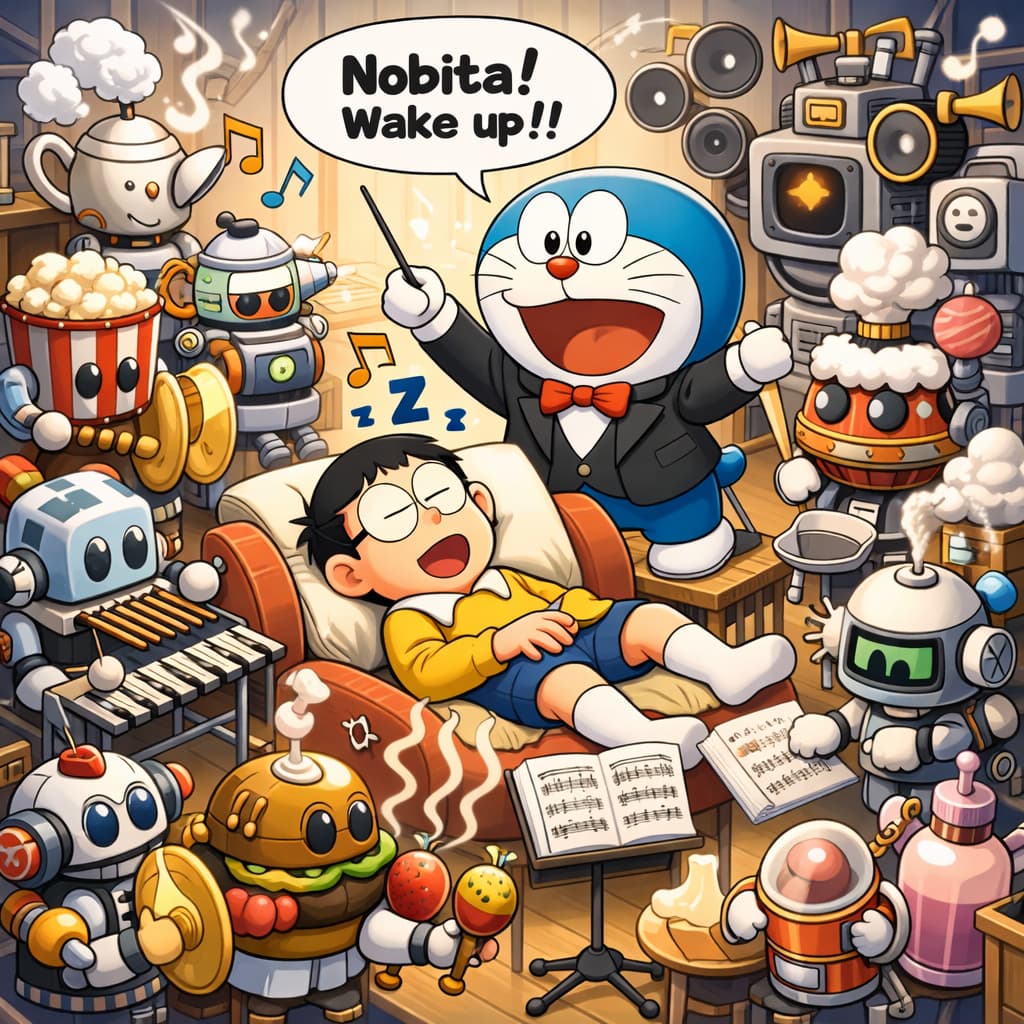
This is a concept piece, not a build guide. It's about exploring an idea, the science behind it, and imagining what could exist.
Waking up is one of those universal human experiences that we've somehow accepted as unpleasant. The alarm screams. You jolt awake. Your brain is foggy, your body doesn't want to move, and the day already feels like it's happening to you rather than with you.
But what if waking up could feel like a gentle transition? What if your environment (temperature, light, sound, even scent) worked together to ease you into consciousness at the right moment, in the right way?
That's the idea behind what I'm calling the Wake Orchestrator.
The Problem with Current Solutions
The market is full of products that tackle wake-up from one angle:
- Smart mattress covers (like Eight Sleep) control temperature and can vibrate you awake, but they don't talk to your lights or curtains.
- Sunrise alarm clocks (like Philips SmartSleep or Hatch) simulate dawn with light, but they don't know if you're in deep sleep or light sleep.
- Smart curtains (like SwitchBot) can open on a timer, but they're not coordinated with anything else.
- Sleep tracking apps know your sleep cycles but can only play a sound. They can't control your room.
Each product is an instrument playing solo. There's no conductor. No orchestra.
The insight: we have solutions for individual senses, but nothing that synchronizes them based on your actual sleep state.
What the Science Says
The research is clear: combined sensory stimuli outperform single-modality approaches for waking. Your brain responds to multiple channels, and when they're aligned with your circadian rhythm and sleep stage, the transition from sleep to wake becomes smoother and less jarring.
Let's look at each channel.
Temperature
Your core body temperature naturally drops during sleep and rises before waking. This rhythm is part of your circadian cycle.
Research published in the Journal of Physiological Anthropology found that:
- Optimal sleep temperature is around 15–19°C (60–67°F)
- Gradual warming toward 20–22°C (68–72°F) around wake time supports the natural cortisol awakening response
- Increased ambient temperature helps suppress melatonin and signals your body that it's time to get up
Source: Okamoto-Mizuno, K., & Mizuno, K. (2012). Effects of thermal environment on sleep and circadian rhythm. Journal of Physiological Anthropology, 31(1), 14. PMC3427038
Light
Light is the primary zeitgeber, the main cue that sets your internal clock. Blue-enriched light (460–480nm wavelength) is particularly effective because it activates melanopsin-containing cells in your retina that connect directly to the suprachiasmatic nucleus (SCN), your brain's master clock.
Key findings:
- Gradual sunrise simulation over 20–30 minutes is more effective than sudden bright light
- Morning light exposure of 7,000–10,000 lux suppresses melatonin within 30–60 minutes
- Even brief, appropriately-timed light exposure can shift circadian phase
Source: Blume, C., Garbazza, C., & Spitschan, M. (2019). Effects of light on human circadian rhythms, sleep and mood. Somnologie, 23(3), 147–156. PMC6751071
Sound
Not all alarm sounds are created equal. Research from RMIT University found that melodic, tuneful alarms significantly reduce sleep inertia compared to harsh beeping sounds.
The ideal characteristics:
- Dominant frequency around 500Hz (roughly the key of C5)
- Tempo of 100–120 beats per minute
- Gradual volume increase rather than sudden loud noise
- Melodic and harmonious tones reduce the startle response
Waking during light sleep (detected via movement and heart rate patterns) produces better outcomes for morning alertness than waking during deep sleep or REM.
Source: McFarlane, S. J., Garcia, J. E., Verhagen, D. S., & Dyer, A. G. (2020). Alarm tones, music and their elements: Analysis of reported waking sounds to counteract sleep inertia. PLOS ONE, 15(1). PLOS One
Scent
Smell has a unique pathway to the brain. When you inhale a scent, olfactory receptors send signals directly to the limbic system, the region controlling emotions, memory, and stress response. This makes scent surprisingly effective for influencing alertness.
Alertness-promoting scents:
- Peppermint: Improves focus, reaction time, and memory recall
- Citrus (lemon, orange): Supports serotonin production, reduces fatigue
- Rosemary: Enhances cognitive performance and concentration
- Coffee aroma: Studies show even smelling coffee improves alertness without consuming caffeine
Research is exploring whether scent exposure 30 minutes before waking can condition the Cortisol Awakening Response (CAR), essentially training your body to wake up more alert.
Source: Conditioning of the Cortisol Awakening Response in Healthy Men: Study Protocol. Frontiers in Neuroscience, 2023. PMC10337450
Source: Sleep Foundation. Smell and Sleep: How Scents Can Affect Sleep. sleepfoundation.org
Touch (Vibration)
Gentle vibration during light sleep phases provides a tactile cue that can wake you without the shock of loud audio. Wearable alarms and bed shakers use this principle, often combining it with sleep-cycle detection.
Research on multisensory wearables shows that combining accelerometry with heart rate data achieves approximately 90% accuracy in detecting sleep-wake states, meaning the system can time the vibration to catch you in a lighter phase.
Source: Roomkham, S., Lovell, D., Cheung, J., & Perber, D. (2021). Past, Present, and Future of Multisensory Wearable Technology to Monitor Sleep and Circadian Rhythms. Frontiers in Digital Health. Frontiers
Intent (The Human Layer)
This is where the Morning Intent Alarm concept comes in. All the sensory channels above prepare your body. But what about your mind?
Hearing your own voice, with context you set the night before, bridges the gap between "awake" and "present." It's not motivation from a stranger. It's you reminding you what matters today.
The Vision: Orchestrated Wake-Up
Imagine this sequence:
T-30 minutes: Your smart lighting begins a gradual sunrise: warm amber tones shifting slowly toward cooler daylight spectrum.
T-20 minutes: Your thermostat or smart mattress pad starts raising the temperature from 17°C toward 21°C.
T-10 minutes: A scent diffuser releases a gentle peppermint or citrus aroma.
T-5 minutes: The system detects you've entered a light sleep phase via your wearable or mattress sensor.
T-0: Gentle vibration on your wrist or mattress. A soft, melodic tone begins at low volume, gradually increasing. Then your own voice, with the intention you recorded last night.
You open your eyes. The room is bright but not harsh. You're warm but not groggy. You already know what your first move is.
The alarm didn't wake you. The environment transitioned you.
What Would It Take to Build This?
The components exist. What's missing is the orchestration layer, a system that:
- Receives sleep state data from a wearable, mattress sensor, or app
- Controls multiple devices: smart lights, thermostat/AC, scent diffuser, curtain motor, speaker
- Coordinates timing based on your target wake time and current sleep phase
- Personalizes over time by learning which combinations work best for you
This could be a hub, an app with smart home integrations, or even a hardware product that bundles the key components.
The hard parts:
- Interoperability: Getting different brands to play together (or building a closed ecosystem)
- Scent delivery: Automated diffusers exist, but timing and intensity control is still crude
- Sleep detection accuracy: Consumer wearables are getting better, but not perfect
Why This Matters
Waking up sets the tone for everything that follows. When you start the day reactive (groggy, disoriented, reaching for your phone), you're already behind. When you start the day transitioned (alert, oriented, intentional), you're ahead before you've even gotten out of bed.
This isn't about optimizing for productivity at all costs. It's about respecting the transition between rest and action. About designing an experience that works with your biology instead of against it.
The Wake Orchestrator is still just an idea, a concept sitting in my Tinker Studio. But the science is there. The components exist. Someone just needs to connect the dots.
Maybe that someone is me. Maybe it's you. Either way, I think it's worth exploring.
See More
This concept lives in my Tinker Studio, a space for ideas at various stages of development. Some become real projects. Some stay as explorations. This one is early, but it's one I keep thinking about.
If you're interested in the audio/intent piece specifically, check out the Morning Intent Alarm build documentation. That's a narrower slice of this vision that I'm actively prototyping.